
Things to Watch - 2026
ESI Research Team

Message from the Founder
As we move through 2026, the global landscape continues to be shaped by a complex interplay of geopolitical shifts, technological disruption, and evolving economic strategies. This year is proving pivotal across regions and sectors — from the rising imperative of data-centre security and the recalibration of Gulf security alliances, to shifting political dynamics in Eastern Europe and renewed contestation in Latin America. Meanwhile, technological innovation, most notably in artificial intelligence, is rapidly redefining labour markets and industry structures worldwide.
Our “Things to Watch” report provides a broad overview of some of the critical developments shaping decision-making for governments, businesses, and investors. Across continents, we highlight key trends, from long-term capital reshaping Africa’s infrastructure to strategic economic engagements in the Asia-Pacific and ongoing political realignments.
In a year defined by uncertainty and rapid change, this report offers just a snapshot of the key topics our research analysts will be closely monitoring as 2026 unfolds.
— Ben Goddard
Contents:
1. 2026: The Year Data-Centre Security Goes Mainstream Risk
Ben Goddard
2. AI, Workplace Trends and the Labour Market
Bree Stewart
3. Putin’s Allies — Losing or Gaining Support in 2026?
Ben Goddard
4. Poland’s Political Pendulum
Ben Thompson
5. The Gulf’s Security Recalibration and Economic Realignment in 2026
Elene Chkhaidze
6. UAE 2026: Sudan as a Test of Economic Statecraft
Ryan Shaban
7. Venezuela’s Power Struggle in 2026: Institutional Resilience Amid US Intervention
Matheus de Freitas Cecílio
8. Trade as Strategy: Taiwan’s Economic Engagement with Pacific Island Partners
Hannah White
9. Long-Horizon Capital: Shaping Africa’s 2026 Investment Landscape
Andrew Burke
10. Flight Path 2026: How Geopolitics and Supply Chain Strains Will Define the Airline Industry
Adam Mutaf
2026: The Year Data-Centre Security Goes Mainstream Risk
Ben Goddard
Data centres have quietly become the backbone of the digital economy, powering everything from cloud computing and AI applications to financial services and government operations. The rapid expansion, driven by surging demand for AI, 5G, and streaming services, has pushed data centres into the spotlight as critical infrastructure. Global capacity continues to grow, with new facilities emerging in strategic hubs worldwide. Yet, this growth brings fresh challenges, as reliance on these facilities intensifies amid rising concerns over security, energy consumption, and environmental impact. Data centres are no longer just private assets, they are vital to national and economic stability.
The risks facing data centres stem from a complex mix of evolving threats, including cyberattacks, physical sabotage, and geopolitical tensions characteristic of modern hybrid warfare. As digital infrastructure is increasingly viewed through a national security lens, hostile actors, whether state‑sponsored hackers or proxy groups, see these facilities as high‑value targets capable of causing widespread disruption. Recent hybrid sabotage campaigns in Europe, involving attacks on critical transport and communications links, underscore how adversaries are willing to strike infrastructure to generate economic and political leverage. A targeted shutdown or sabotage of a major data hub can cause anything from localised service disruptions to crippling financial systems, cloud services and emergency networks, with cascading effects across multiple sectors.
Data centres are among the fastest-growing consumers of electricity globally, with energy demand rising sharply due to AI workloads and cloud expansion. This growing appetite strains local power grids and heightens vulnerability to energy shortages or rationing, especially in regions facing climate-related supply disruptions. Ensuring reliable, sustainable energy supply will be critical in 2026 as operators balance operational needs with increasing regulatory and community pressure to reduce carbon footprints.
Despite rapid expansion, data centres remain heavily concentrated in a handful of global hubs, such as Northern Virginia, Dublin, and Singapore. This geographic clustering increases systemic risk, as disruptions in these areas could trigger ripple effects across global digital services. Compounding these vulnerabilities are complex supply chains for critical hardware and cooling systems, which remain exposed to geopolitical tensions and manufacturing bottlenecks. As reliance on digital infrastructure deepens, stakeholders must urgently rethink security beyond traditional cyber defences — integrating climate risk, energy resilience, and geopolitical realities into robust contingency planning for 2026 and beyond.
AI, Workplace Trends and the Labour Market
Bree Stewart
Artificial intelligence is reshaping global labour markets at a pace that continues to outstrip regulatory, educational and economic adaptation. Over the course of 2026, AI’s rapid integration into business operations is accelerating a structural shift from the traditional pyramid-shaped workforce, characterised by abundant entry-level roles and a stable middle, towards an increasingly spindle-shaped economy. This emerging model is defined by the expansion of high-skill, high-wage technical roles at the top, alongside the erosion of mid-tier and early-career positions that have historically underpinned middle-class security.
This transition is occurring against a longer backdrop of technology-driven job creation. Approximately 60% of U.S. workers today are employed in occupations that did not exist in 1940, with over 85% of employment growth since then attributed to technological innovation. Yet despite AI’s transformational potential, adoption remains uneven. Many small- and medium-sized enterprises have yet to integrate AI meaningfully into regular workflows, limiting both productivity gains and labour-market diffusion.
Where adoption has taken hold, however, labour-market effects are already pronounced. Workers with AI-related skills can now command wage premiums of up to 56%, more than double the previous year’s figure. At the same time, the World Economic Forum projects 170 million new jobs globally this decade, while anticipating that 23% of existing roles will change, and that 44% of workers’ core skills will require updating by 2027. Analytical thinking, creativity, AI literacy and adaptability are expected to dominate future hiring priorities.
The most immediate disruptions are occurring at entry level. AI systems are increasingly performing tasks traditionally undertaken by junior analysts, paralegals, administrative staff and early-career researchers. While this delivers efficiency gains for employers, it removes the foundational roles on which young workers rely for skill development and career progression. Delays in economic integration, heightened precarity and reduced access to opportunity are contributing to declining institutional trust and rising youth-led mobilisation across advanced economies.
Advanced economies such as the United States, South Korea and parts of Europe are likely to experience growing demand for elite digital talent alongside a continued hollowing-out of mid-tier roles. This imbalance is already prompting increased youth mobility towards technology-rich hubs such as Singapore, Dubai and Western Europe, intensifying demographic, housing and political pressures in destination countries.
Alongside these trends, a counter-movement is likely to emerge in parallel: a renewed interest in blue-collar and skilled trades among younger cohorts. Feeling unsupported by corporate structures, priced out of major cities and excluded from conventional professional pathways, a growing number of young adults are turning towards trades that offer clearer progression, practical qualifications and the potential for self-employment. Construction, electrical work, plumbing, logistics and automotive repair are increasingly viewed as resilient to AI displacement and more financially reliable than precarious white-collar entry-level roles. This shift is likely to become one of the most significant social and cultural responses to AI-driven workforce restructuring in 2026.
Looking ahead, the stakes extend well beyond productivity gains. Generative AI could contribute between USD 2.6 and 4.4 trillion annually to the global economy, more than the UK’s entire 2021 GDP, yet the distribution of these benefits will remain uneven. Governments that can provide credible pathways into both AI-driven sectors and skilled manual trades will be better positioned to strengthen social cohesion, sustain competitiveness and mitigate political volatility, while businesses that fail to adapt workforce models and reskilling strategies risk exposure to talent shortages and rising labour costs, as the spindle-shaped economy continues to redefine global labour markets in 2026 and beyond.

Putin’s Allies — Losing or Gaining Support in 2026?
Ben Goddard
Russia’s domestic political landscape remains tightly controlled, with the 2026 parliamentary elections expected to reinforce President Putin’s grip through United Russia’s continued dominance. Yet, while internal stability looks assured, the more significant shifts for Moscow will come from its global network of allies and the political developments that will test their loyalty in the year ahead.
In Europe, Hungary’s April 2026 elections represent a critical barometer. Prime Minister Viktor Orbán’s Fidesz party has long been one of Russia’s strongest supporters within the EU, helping soften the impact of sanctions and maintain close ties with Putin. Orbán has championed a negotiated ceasefire, opposed further EU military aid to Ukraine, and secured continued Russian energy supplies despite EU efforts to diversify. His direct communications with Putin on sensitive issues like frozen Russian assets underscore a deliberate challenge to EU unity. A victory for Orbán would preserve Moscow’s valuable foothold; defeat could deepen Russia’s isolation in Europe.
Armenia’s parliamentary elections in June 2026 add further complexity. Traditionally a close security partner of Russia, Armenia under Prime Minister Nikol Pashinyan has sought to balance Western engagement with Kremlin ties amid persistent regional tensions. Since the 2020 Nagorno-Karabakh war, relations with Moscow have been strained; Russian peacekeepers remain in the region, but many in Yerevan question Russia’s reliability after Moscow’s limited intervention during the conflict. Pashinyan’s government has pursued deeper ties with the EU and the US while cautiously maintaining security cooperation with Russia, reflecting a complex domestic and geopolitical balancing act. Ahead of the vote, Moscow-linked disinformation campaigns have sought to undermine trust in Armenia’s democratic institutions, while Yerevan has turned to the EU for help countering hybrid threats and foreign interference. The election outcome could decisively shift Armenia’s geopolitical alignment, either cementing closer ties with the West or enabling a resurgence of pro-Russian forces that would recalibrate power in the South Caucasus.
Beyond elections, Putin’s conventional allies remain concentrated across the post-Soviet space and select authoritarian regimes in Eurasia and beyond. Countries like Belarus, Kazakhstan, and other Central Asian states continue to offer steady, if increasingly pragmatic, support for Moscow. In the Middle East, Africa, and parts of South Asia, Russia’s influence is maintained through strategic partnerships rather than electoral mandates, with many governments balancing Moscow’s overtures against competing Western and Chinese interests. While these traditional allies provide a reliable base, their support is subject to evolving geopolitical calculations, making Moscow’s influence durable but far from unassailable heading into 2026.
Poland’s Political Pendulum
Ben Thompson
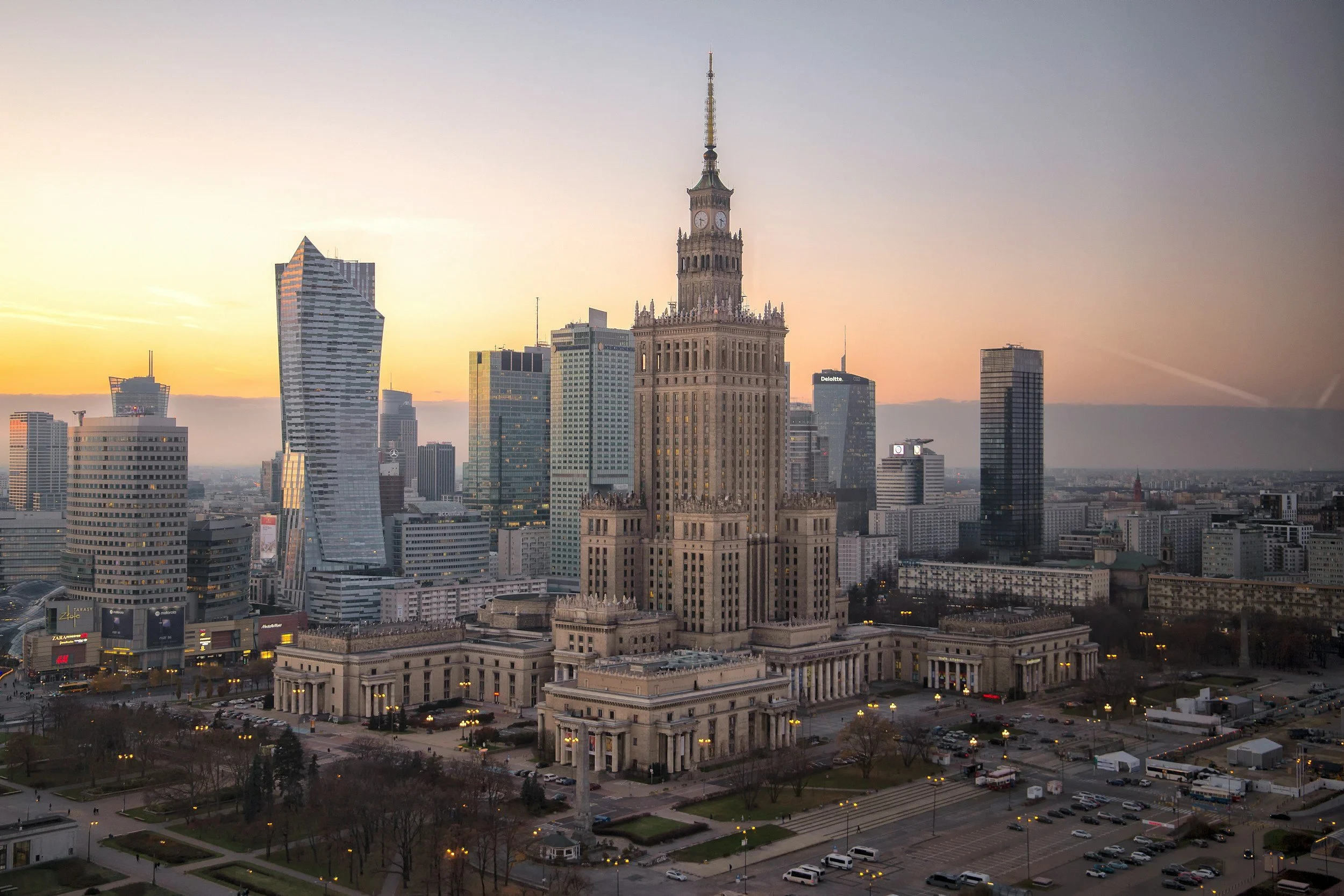
In 2025, Poland asserted itself across European foreign policy, economic cooperation, and security amid sharp internal political division. The June presidential election brought Karol Nawrocki of the Law and Justice Party (PiS) to power, renewing Poland’s power struggle with Prime Minister Donald Tusk’s Civic Coalition, which won the parliamentary vote in 2023. PiS champions economic and political sovereignty and conservative social policies, while Tusk pushes closer EU ties, market reforms, and social inclusion. This political pendulum swings back and forth, producing bureaucratic stalemates that may limit Poland’s international influence.
Both leaders agree on sustaining economic growth, strengthening the Złoty, and modernising infrastructure and energy, including reducing Poland’s reliance on coal. However, the competing visions on how to achieve these goals have led to political gridlock. Tusk’s efforts to deepen EU integration and unlock frozen EU funds hinge on reforms that Nawrocki and PiS oppose due to concerns over sovereignty and control. Meanwhile, Nawrocki’s push for greater state control and consolidation faces resistance from Tusk’s camp, which argues that it deters investment and fuels corruption allegations. This tug-of-war creates uncertainty that hampers the consistent implementation of economic policies.
Security concerns dominate Poland’s agenda amid the ongoing Russia-Ukraine war unfolding on its eastern border. Poland remains Europe’s highest NATO military spender as a share of GDP, reflecting broad political consensus on countering Russian aggression. While both sides support key initiatives such as the ‘Eastern Shield’ defence plan and enhanced NATO cooperation, political divisions continue to impact strategic coherence. The ‘Eastern Shield’ proposal, which involves creating an extensive minefield along the Suwałki Gap, underscores Poland’s focus on protecting vulnerable border areas. In 2025, reports of Russian airspace violations and hybrid attacks prompted Poland to invoke NATO’s Article 4, calling for consultations and increased cooperation in the Baltic region. This led to reinforcement of NATO’s Sentry operations and the Eastern Flank, strengthening regional deterrence. However, disagreements over the extent of integration with EU security frameworks and the pace of defence project implementation persist. Parliamentary disputes and bureaucratic delays have slowed progress on critical initiatives, illustrating how domestic political friction risks undermining Poland’s regional security ambitions.
Looking ahead, Poland’s political pendulum will likely keep swinging, prolonging bureaucratic gridlock that slows key economic reforms and security projects. Deadlock over EU integration and state control risks delaying funding and deterring investment, while divisions may hinder defence initiatives vital for regional stability. Yet rising external pressures could force pragmatic compromises, unlocking some progress. Ultimately, 2026 will test whether Poland can overcome internal rivalry to maintain its influence and resilience in Europe.
The Gulf’s Security Recalibration and Economic Realignment in 2026
Elene Chkhaidze
On June 23, 2025, Iranian airstrikes on Al-Udeid Air Base challenged the assumption that Qatar, home to the largest American military airbase in the Middle East, was immune from direct attack. The strikes cast doubt on U.S. security guarantees. While initially contained, hopes of avoiding further fallout ended when Israeli jets struck a Doha building housing Hamas officials two months later. The attack missed its target but killed lower-ranking Hamas operatives and a Qatari police officer, sparking outrage and regional shockwaves. Gulf states responded swiftly. An emergency Arab-Islamic Summit in Doha and two GCC Defense Council meetings led to commitments on intelligence sharing, early warning systems, and joint air defence drills, reinforcing collective defence and strategic sovereignty.
These incidents deepened eroding confidence in U.S. deterrence. From muted responses to the 2019 Abqaiq and 2022 Houthi attacks, to withdrawing Yemen offensive support and redeploying air-defense assets, Gulf states learned hosting U.S. troops and buying American systems no longer guarantees protection when Washington is politically unwilling to intervene, especially in Israel-related crises. This vulnerability is worsened by the Gulf’s heavy reliance on U.S. arms imports.
Saudi Arabia and the UAE are investing in domestic defence manufacturing to build export-capable industries. This recalibration hasn’t weakened ties with Washington; Saudi Arabia’s major non-NATO ally status was reaffirmed during Crown Prince Mohammed bin Salman’s November 2025 visit, when President Trump approved F-35 fighter jet sales.
The recalibration extends beyond the GCC. Gulf states increasingly seek cooperation with regional middle powers such as Egypt, Pakistan, and Türkiye for broader stability. Notably, Saudi Arabia and Pakistan signed a Strategic Mutual Defence Agreement, stating aggression against one is aggression against both. Pakistan’s defence ties with China mean Beijing may benefit indirectly, even as its role complements rather than replaces U.S. guarantees. Despite GCC divisions over Israel, Iran, and Beijing, 2026 should see more coordinated GCC efforts to hedge against overreliance on U.S. security assurances.
Economically, the Gulf’s eastward pivot continues. Trade with Asia reached USD 516 billion in 2022 and is projected to exceed USD 750 billion by 2030, outpacing growth with traditional Western partners. The GCC–ASEAN–China Summit in May 2025 expanded cooperation beyond trade to supply-chain resilience, digital infrastructure, energy transition, and technology transfer, reflecting concerns over global fragmentation and geopolitical volatility.
Industrial policy is central. Gulf sovereign wealth funds are increasingly channelled into Asia, reinforcing domestic diversification and embedding the Gulf deeper in Asia’s growth ecosystems. This pivot will grow in 2026, evolving toward a coordinated interregional framework amid geopolitical uncertainty.
2026 will be pivotal for the Gulf’s strategic recalibration. The balance between strengthening defence capabilities and maintaining key alliances, especially with the U.S., will shape security dynamics. Managing GCC tensions and navigating global power competition will test resilience. The eastward economic pivot will accelerate, with sovereign wealth funds playing a proactive role in Asia, aligning capital flows with diversification and resilience. These intertwined security and economic shifts will have profound impacts far beyond the Gulf, shaping global geopolitical and economic landscapes throughout 2026 and beyond.
UAE 2026: Sudan as a Test of Economic Statecraft
Ryan Shaban
The United Arab Emirates enters 2026 as one of the world’s most resilient growth hubs. Yet Sudan’s civil war, described by the United States as involving acts amounting to genocide, has become an unexpected test of Emirati economic statecraft. The issue is not whether the UAE will continue to grow, but whether its expanding geopolitical footprint is beginning to impose quiet costs on a hub economy built on reputation, neutrality, and frictionless integration with Western systems.
GDP growth of around 5.5% is expected, driven by resilient non-oil sectors including tourism, logistics, finance, real estate, and technology, alongside a rebound in oil output as OPEC+ constraints ease. For businesses and investors, however, Sudan reframes the outlook. The risk lies less in macroeconomic fundamentals and more in whether geopolitical exposure is translating into regulatory, legal, and compliance friction.
In trade terms, Sudan is insignificant to the UAE; a reality underscored by Abu Dhabi’s ability to impose a full trade ban in August 2025 with minimal economic consequence. Sudan matters because it exposes a different kind of risk. The conflict has moved beyond diplomatic ambiguity into the domain of law and institutional scrutiny. U.S. accusations that the Rapid Support Forces (RSF) have committed acts amounting to genocide, ongoing proceedings at the International Court of Justice, and sustained UN attention have embedded Sudan into Western legal and regulatory systems. That scrutiny increasingly overlaps with areas central to the UAE’s economic model: gold markets, logistics networks, and financial services.
Leaked UN expert reporting has documented multiple cargo flights from the UAE to Chad, where alleged arms transfers into Sudan have been monitored. The UAE has categorically denied any support for the RSF, dismissing the allegations as disinformation. Yet denial has not removed attention. The same period saw intense Emirati lobbying in Europe, resulting in the European Parliament resolution condemning atrocities in Sudan to controversially omit mention of the UAE. The episode highlighted Abu Dhabi’s diplomatic influence, while also exposing the widening gap between political outcomes and regulatory realities.
For compliance teams, banks, insurers, and commodities firms, Sudan is less a foreign policy issue than a risk-management problem. Anti-Money Laundering, Counter-Terrorist Financing, conflict-minerals regulations, and ESG standards are likely to sharpen scrutiny of UAE-linked activity. In 2026, the consequences are unlikely to take the form of formal sanctions. Instead, pressure will surface quietly: higher compliance costs, slower correspondent banking relationships, and intensified due diligence in sensitive sectors.
The most probable outcome is friction, not fracture. Western governments remain deeply reliant on the UAE for energy security, defence cooperation, investment flows, and regional stability, making sanctions improbable. However, trade negotiations are likely to become more conditional, regulatory tolerance narrower, and the cost of capital incrementally higher for firms exposed to reputational and legal risk.
The UAE enters 2026 with a substantial buffer in the form of deep economic interdependence with Western partners. Yet Sudan illustrates a growing tension at the heart of the Emirati model. While influence may help manage accountability for a time, it is unlikely to fully protect a hub economy from the effects of geopolitical risks in the long term. Growth will continue. But for an economy built on credibility and access, the costs associated with proximity to foreign conflicts are unlikely to remain invisible. They will surface quietly - through higher transaction costs, slower deal velocity, and narrowing margins at the edges of the system.

Venezuela’s Power Struggle in 2026: Institutional Resilience Amid US Intervention
Matheus de Freitas Cecílio
For Latin America, 2026 started with a bang, as the region awoke to news that a coordinated U.S. military operation had resulted in Venezuelan President Nicolás Maduro’s capture and transfer to the United States, where he is expected to face drug-trafficking charges. Starting with heightened tensions throughout 2025, the crisis involved the seizure of oil tankers and multiple U.S. strikes against vessels in the Caribbean targeting alleged drug trafficking. It culminated in the high-profile extraction of Maduro and his wife from Caracas. Washington’s decisive intervention signaled a renewed strategic focus on Latin America and a firm stance against rival powers’ influence in the region.
Seeking to maintain and strengthen its influence in the region, Washington regards the Caribbean as a critical strategic zone, where it aims to counter growing Russian and Chinese presence. Echoing the geopolitical notions of Nicholas Spykman, who referred to the Caribbean as the “Mediterranean Sea” of the Americas, U.S. policy documents reaffirm the region’s privileged strategic importance. The 2025 U.S. National Security Strategy explicitly highlights renewed focus on the Western Hemisphere, framing recent actions in Venezuela within this broader context.
Following Maduro’s capture, Trump mentioned the U.S. would ‘run’ the country until acceptable leadership could fill the gap. However, in practice, power currently remains concentrated in the hands of Maduro’s loyalists, with Vice President Delcy Rodríguez and the Venezuelan Supreme Court asserting control and maintaining the regime’s institutional apparatus. This ambiguous interim period could complicate coordination with opposition leaders such as María Corina Machado or Edmundo González, whose political objectives may not align with a U.S.-led transition. Historical parallels to U.S. interventions in Iraq and Afghanistan illustrate the risks that sustained external pressure and intervention may create protracted instability rather than a clear, orderly political transition. Venezuela’s entrenched security apparatus, continued influence from foreign partners, and Chavismo’s control over state institutions significantly diminish the likelihood of a swift constitutional transition, even amid heightened diplomatic and economic pressure. International actors remain wary of scenarios that could destabilize the region further or embroil the U.S. in a costly geopolitical entanglement.
Furthermore, Trump has indicated that U.S. companies intend to play a role in restructuring Venezuela’s oil sector. Although the U.S. has been largely self-sufficient and a net oil exporter since the shale revolution, Venezuela’s vast heavy crude reserves remain strategically significant. However, many critical questions persist, particularly regarding PDVSA’s deteriorated operational capacity, the specific nature and extent of potential U.S. corporate involvement, and the level of local political and social support for such initiatives.
As 2026 unfolds, Venezuela’s entrenched power structures remain intact despite Maduro’s removal. Opposition leaders may gain ground, but real political change hinges on shifting alliances within the military, which remains a key pillar of regime stability. Given these dynamics, further instability and social costs are likely, and regional actors will closely watch for escalation or broader disruption.
Trade as Strategy: Taiwan’s Economic Engagement with Pacific Island Partners
Hannah White
As geopolitical competition intensifies across the Asia-Pacific, Taiwan is increasingly using trade as a strategic tool to mitigate diplomatic isolation and reinforce its limited network of international partners. With formal recognition confined to a small number of states and mounting pressure from Beijing, sustaining economic and political ties has become central to Taiwan’s broader security calculus. Pacific Island nations, despite their geographic isolation and modest trade volumes, are therefore gaining importance as platforms for influence, legitimacy, and regional presence.
Taiwan’s engagement with Pacific Island partners has typically combined development assistance, technical expertise, and public-sector services in exchange for diplomatic recognition, delivering tangible benefits to small island states with limited administrative capacity. In parallel, these relationships help Taipei demonstrate sustained international engagement at a time when backing from major security partners, particularly the United States, remains indispensable but politically constrained. In 2025, Taiwan reinforced this approach by signing a three-year cooperation pact with the Pacific Islands Forum Secretariat in Tonga during the annual Countries Dialogue, signalling a longer-term commitment to multilateral engagement in the Pacific alongside bilateral cooperation with individual island states.
Tuvalu and Palau, both of which formally recognise Taiwanese sovereignty, have sought deeper diplomatic cooperation with Taiwan through trade. In November, three pacts were signed between Tuvalu and Taiwan focused on healthcare and food security, with collaboration in fisheries and climate action also identified as priorities. Palau, located along the so-called Second Island Chain, occupies a strategic position in major power dynamics and regards Taiwan as a “trusted friend.” While Palau benefits from Taiwanese agricultural, academic, and medical assistance, it also attracts Chinese investment, reflecting overlapping interests among multiple external partners. Reliance on Huawei in the telecommunications sector has introduced sensitivities, given Palau’s close relationship with the United States. Unlike the Marshall Islands and Micronesia, Palau is not currently subject to U.S. trade or tariff measures, though technology dependencies remain strategically relevant. In November, Taiwan also appointed a new ambassador to the Marshall Islands and signed a bilateral security cooperation pact in June, emphasising maritime security and cybersecurity, signalling a sustained commitment to shared regional goals.
In 2026, Pacific Island nations are likely to deepen regional cooperation, sharing security resources and trade partnerships as a collective strategy to counterbalance growing influence from major powers like China and the United States. As Beijing’s Belt and Road Initiative continues to expand its footprint and Taipei strengthens its diplomatic and security ties, these small states will increasingly band together to safeguard their sovereignty and negotiate from a position of greater unity. Multilateral frameworks such as the Pacific Islands Forum and emerging security agreements will play a crucial role in fostering collaboration on maritime security, climate resilience, and digital infrastructure, allowing these countries to better manage external pressures and regional instability.
At the same time, the diplomatic landscape will remain fluid. Countries that shifted recognition from Taipei to Beijing in recent years, including Kiribati, the Solomon Islands, and Nauru, will continue to deepen economic and strategic partnerships with China, potentially shifting the balance of influence across the region. Meanwhile, those maintaining ties with Taiwan will seek to leverage their relationships to reinforce political legitimacy and access development assistance. The dynamic interplay between these competing influences is set to shape the Pacific’s geopolitical environment throughout 2026, with implications for regional security, trade, and governance that extend well beyond the islands themselves.

Long-Horizon Capital: Shaping Africa’s 2026 Investment Landscape
Andrew Burke
In 2026, Africa’s investment landscape is defined less by new inflows and more by the ability of domestic institutions to deploy capital on multi-decade horizons. African sovereign wealth funds and state investment vehicles collectively manage assets estimated at around USD 120–130 billion across more than 20 countries. These funds are increasingly positioned to support strategic, multi-year projects rather than serving solely as stabilisation reserves.
This shift enables projects previously too slow or complex to finance. Regional power grids, transport and logistics corridors, port modernisation, large-scale mining, and advanced manufacturing require extended build cycles and risk tolerance that short-term financing structures cannot support. Traditional short-duration, venture-style capital models are increasingly seen as mismatched for African markets, prompting the rise of alternative fund structures better suited to modernisation and development.
Throughout 2026, institutional maturity and predictable regulatory frameworks will continue to advance. Governments in Kenya, Senegal, Morocco and Ethiopia have expanded state-backed investment vehicles, clarified concession processes, and improved project preparation capacity, reducing execution risk and encouraging long-term capital commitments. In Tanzania, the Kabanga Nickel Project is targeting 2026 financial close under a multi-source financing structure, illustrating how long-horizon capital and regulatory clarity are increasingly prerequisites for large-scale resource projects.
This trend supports deeper regional economic integration and cross-border cooperation, widely regarded as critical to the continent’s long-term economic health. Long-horizon capital enables planning beyond national borders, fostering cross-border energy interconnections and logistics corridors aligned with trade routes and resource geographies rather than political boundaries. This shift from nationally siloed initiatives toward systems-level planning has positive implications for integration and competitiveness across Africa.
Domestic investment vehicles continue to act as catalysts enabling broader private capital participation. By anchoring early-stage risk, sovereign and infrastructure funds facilitate private capital entry into blended finance structures at a time when global investors seek long-duration real-asset exposure but face constraints from risk and rate sensitivity. At the 2025 Africa Investment Forum in Rabat, investors expressed strong interest, totaling USD 15.3 billion across 39 bankable projects, highlighting a clear preference for well-structured platforms that offer scale, transparency, and disciplined risk-sharing—a trend set to continue throughout the year.
Challenges remain, including uneven governance and transparency across countries. Ensuring strong governance around execution will be critical, as not all investment vehicles have fully mature oversight mechanisms. Debt discipline also poses risks if capital is deployed without clear return expectations, as extended time horizons can defer accountability and allow contingent liabilities to accumulate quietly, especially where underperforming projects revert to sovereign balance sheets. Despite these concerns, the structural shift toward patient domestic capital supported by clearer regulatory frameworks is evident and worthy of close attention in 2026.
The key question for this year is whether long-term investment capacity and regulatory predictability deepen further. If so, Africa’s development trajectory will increasingly be shaped by domestically anchored, multi-decade capital strategies rather than externally dictated funding cycles. The impact of this shift will resonate far beyond 2026 but will grow more visible as the year progresses.
Flight Path 2026: How Geopolitics and Supply Chain Strains Will Define the Airline Industry
Adam Mutaf
In 2026, the airline and aerospace industry is expected to continue operating in a structurally fragmented and geopolitically constrained environment. Ongoing quality control issues and persistent supply chain constraints mean the industry will face challenges related to aircraft availability, costs, and competitive dynamics. Heightened U.S.–China tensions, export controls, and sanctions regimes continue to disrupt aerospace supply chains, increasing lead times for components, limiting technology transfer, and raising production costs for aircraft manufacturers and suppliers. These pressures have contributed to record aircraft backlogs and delayed fleet renewal, forcing airlines to operate older aircraft for longer.
Boeing is expanding production capacity across several medium- and long-haul programs at facilities along the U.S. East Coast, intending to materially reduce backlogs by 2027–28. Meanwhile, conflicts in Ukraine and the Middle East are reshaping global air routes, closing airspace, and increasing fuel burn through longer routings, undermining operational efficiency and adding volatility to fuel costs.
Against this backdrop, airline profitability in 2026 is expected to stabilise rather than accelerate, reflecting strong passenger demand alongside persistent cost pressures and capacity constraints. Regulatory scrutiny will remain elevated, particularly for Boeing, where enhanced FAA oversight following past quality and safety issues continues to slow production normalisation and extend certification timelines for key programmes such as the 737 MAX variants and the 777X series, including the 777-9. While the FAA has begun cautiously restoring some delegated certification authority to Boeing, the company remains under close supervision, indicating that its recovery is likely to be gradual and measured rather than rapid.
However, rising defence spending and government industrial policy provide an important counterbalance: escalating geopolitical risks are driving sustained military procurement, offering revenue stability and strategic support for aerospace manufacturers. This dynamic reinforces Boeing’s position in the U.S., while Airbus continues to benefit from coordinated European industrial backing, underscoring how state support, regulation, and geopolitics increasingly shape competitive balance in the global duopoly.
Collectively, these forces point to a 2026 airline industry defined less by cyclical recovery and more by enduring geopolitical risk, regulatory intensity, and policy-driven outcomes.