
Phosphate Rich, Input Poor: Africa's Fertilizer Paradox and the Hormuz Crisis
Andrew Burke
Key Takeaways:
The US-Israel strikes on Iran have disrupted shipping through the Strait of Hormuz, halting fertilizer exports from the Gulf at a critical planting moment. For sub-Saharan Africa, where over 90% of fertilizer is imported, the disruption threatens higher farming costs, reduced yields, and rising food prices into 2026 and 2027.
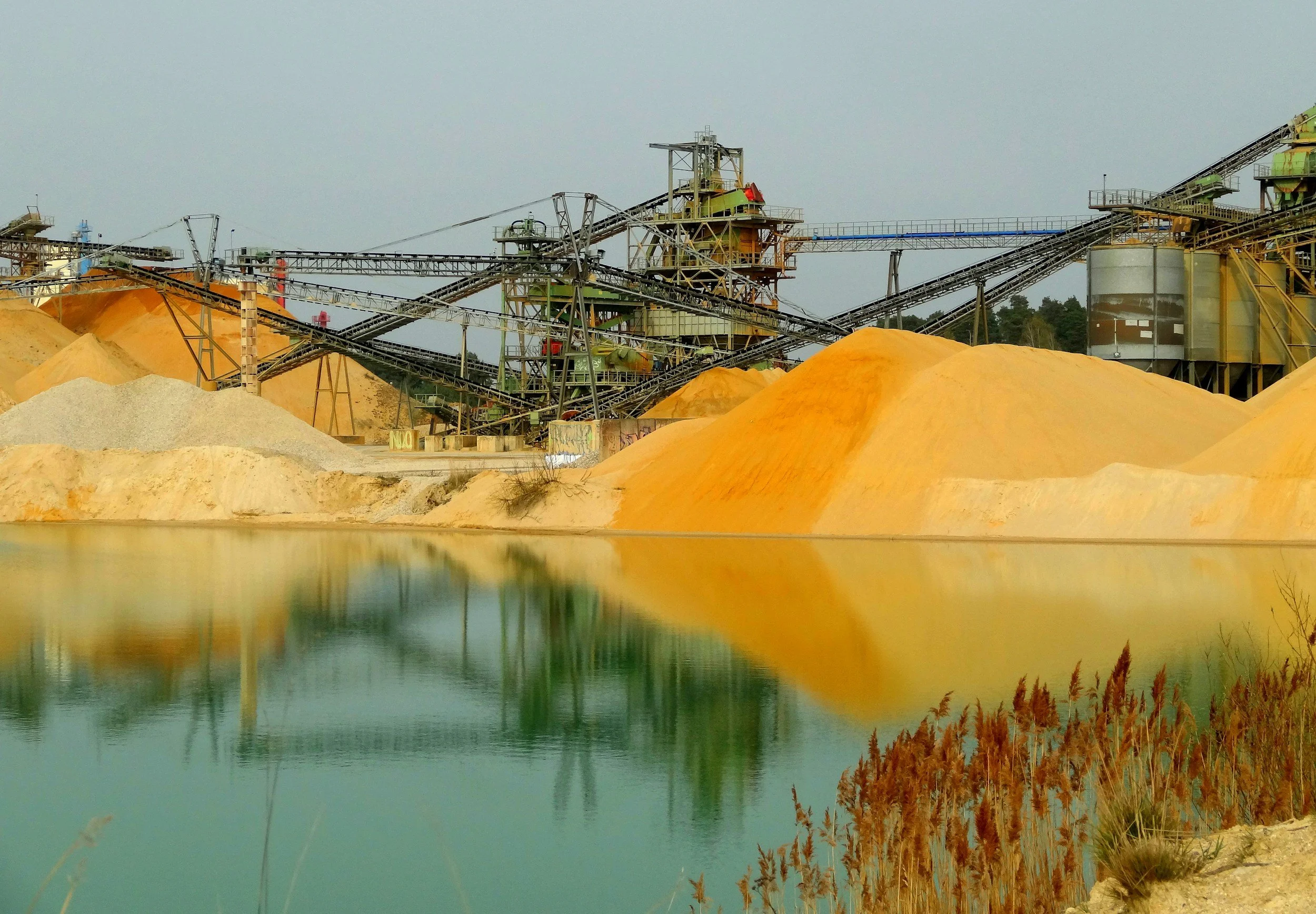
Africa holds over 70% of the world's known phosphate reserves, yet between 2000 and 2020 only 3% of phosphorus produced on the continent was traded within it. The rest was exported overseas while African farmers imported inputs through the very chokepoint now closed.
The AfCFTA provides the structural framework to reduce this dependency, but implementation remains uneven and the deeper barriers of transport costs, regulatory fragmentation, and political resistance to liberalisation remain largely unaddressed.
The more probable near-term outcome is incremental activity within the AfCFTA framework rather than transformative reform, a pattern consistent with Africa's response to the COVID-19 and Black Sea disruptions.
On 28 February 2026, the United States and Israel launched joint airstrikes on Iran, killing Supreme Leader Ali Khamenei and triggering a conflict that has disrupted shipping through the Strait of Hormuz and sent shockwaves through global commodity markets. Brent crude surged past USD 100 per barrel, reaching USD 126 at its peak, the largest monthly increase in oil prices on record. But for Africa, the most consequential dimension of the crisis is not energy, but fertilizer. Roughly a third of globally traded fertilizers transit the Strait of Hormuz, and the conflict has already halted Iranian fertilizer production and disrupted gas-dependent plants in Egypt, Jordan, and Qatar. For sub-Saharan Africa, where over 90% of fertilizer is imported from outside the continent, the consequences threaten to be severe: higher farming costs, reduced crop yields, and rising food prices during key planting seasons.
This disruption lands on a continent that already produces fertilizer at scale. Morocco holds approximately 70% of the world's known phosphate reserves and exported approximately USD 9.6 billion in phosphates and derivatives through November 2025. Egypt is a major nitrogen fertilizer producer. Yet the disconnect between Africa's productive capacity and its patterns of trade is stark. Between 2000 and 2020, Africa extracted 125 million tonnes of phosphorus from phosphate rocks, yet only 3% of that was traded between African countries. The rest left the continent, while sub-Saharan African farmers imported the same inputs from the Gulf, through the very chokepoint that has now effectively closed. The reasons are structural: limited infrastructure connecting North African producers to sub-Saharan markets, prohibitive transport costs, regulatory fragmentation across dozens of national markets, and trade relations that have historically oriented African commodity exports toward Europe, Asia, and the Americas rather than toward neighbouring countries. It is precisely this disconnect that the African Continental Free Trade Area was built to address, but whether it can remains a question of execution rather than ambition.
Current State of the Agreement
Fifty-four of fifty-five African Union members have signed the AfCFTA, while forty-nine have ratified it. More than 92% of the rules governing which products qualify for tariff-free treatment have been agreed, and twenty-four countries have formally published their tariff schedules, meaning they can now legally trade with each other under AfCFTA terms. By mid-2025, more than 8,500 trade certificates had been issued under the framework.
The supporting infrastructure extends beyond tariffs into payments and financial architecture. The Pan-African Payment and Settlement System, an initiative of Afreximbank in collaboration with the African Union and the AfCFTA Secretariat, now connects over 150 commercial banks, enabling cross-border transactions in local currencies and potentially saving an estimated USD 5 billion annually in transaction costs. A USD 10 billion AfCFTA Adjustment Fund is designed to cushion tariff-revenue losses and finance competitiveness upgrades. Some countries are pushing ahead aggressively: Kenya launched digital trade platforms at the AU Summit in February 2026 to transform its embassies into transaction hubs, addressing a bottleneck in which fewer than one percent of 3,500 monthly trade inquiries were converting into deals.
Despite this, the gap between what has been built and what is functioning remains wide. Most businesses, particularly small and medium-sized enterprises, are still unaware of AfCFTA provisions, or unable to access the trade finance required to use them. Implementation levels vary sharply between countries, with some actively trading under preferential terms while others have yet to align their domestic customs systems with the framework. Nowhere is this gap more consequential than in the agricultural commodities and inputs Africa both produces and needs.
The Fertilizer Paradox
The case of fertilizer illustrates the AfCFTA's unrealised potential with clarity. Morocco's state-owned OCP Group is one of the world's largest phosphate producers and exporters, with full-year revenues reaching USD 11.4 billion in 2025. Its primary export markets, however, are Brazil, India, and Europe, rather than markets within Africa. The continent that holds the world's richest phosphate reserves sends the overwhelming majority of its output overseas, while its own farmers depend on imports that transit some of the world's most vulnerable maritime chokepoints.
There are, however, material signs of movement towards intra-continental integration in the fertilizer sector. OCP has inaugurated a phosphate fertilizer plant in Nigeria, importing phosphoric acid from Morocco and combining it with Nigerian gas to produce MAP and DAP fertilizers. It has signed agreements with Ghana for a production facility planned for 2026, and has established blending units across West and East Africa to produce customized fertilizers tailored to local soil conditions. While these are meaningful steps, they reflect the corporate strategy of a single company rather than the AfCFTA framework itself. Moreover, they remain small relative to the scale of the continent's fertilizer deficit. There is also a question of whether this model risks substituting one form of dependency for another, replacing reliance on Gulf imports with reliance on a single Moroccan state enterprise whose own production is partially dependent on Middle Eastern inputs.
The structural barriers are a persistent feature of intra-continental trade in Africa, and the fertilizer industry faces the same constraints as others. Road transport accounts for roughly 29% of the final price of goods traded within Africa, compared to approximately 7% globally, and trucking costs run at two to three times the rate of peer developing regions. On top of this, the bureaucratic barriers that traders face, such as licensing requirements, product standards, sanitary regulations, and customs formalities, can add costs equivalent to tariffs of anywhere from 18 to 300% on the value of goods, depending on the route and the product.
Currency constraints compound the problem. Cross-border payments in Africa still average between 7.4 and 8.5% of the total value sent, well above the global average, with settlement taking three to seven business days through traditional correspondent banking channels. Dollar availability remains a persistent bottleneck, and the foreign exchange exposure inherent in most intra-African transactions adds cost and risk that tariff reductions alone cannot offset. PAPSS is designed to address this through local-currency settlement, but its reach has not yet achieved the density needed to transform the payments landscape for the majority of traders. The continental trade finance gap, estimated at around USD 100 billion, effectively locks most small and medium-sized enterprises out of cross-border commerce. The result is that intra-African trade, despite a notable rebound in recent years, still represents approximately 18% of the continent's total trade, compared with around 60% in Asia and nearly 70% in Europe.
These barriers are rarely purely technical. In many markets, regulatory and customs regimes are shaped as much by political economy as by administrative capacity, with non-tariff measures functioning as de facto protectionist instruments that governments are reluctant to dismantle. Smaller economies also harbour concerns that trade liberalisation under the AfCFTA could concentrate advantages in countries that already possess industrial capacity, further entrenching existing hierarchies.
An Urgent Defensive Measure
The Hormuz disruption is the third major supply chain shock to hit Africa in six years, following the COVID-19 pandemic and the Black Sea disruption triggered by Russia's invasion of Ukraine. Each time, the pattern has been the same: a crisis originating outside the continent, amplified by Africa's structural dependency on imported energy, food inputs, and manufactured goods, and absorbed by economies with limited buffers. The fertilizer dimension makes this iteration particularly acute. Nitrogen-intensive staples such as maize are especially sensitive to supply shortages, and analysts have warned that the combination of rising energy costs and fertilizer disruptions risks reigniting global food inflation.
The disruption compounds existing crises. According to UNCTAD data, Sudan is the country most dependent on Gulf-sourced fertilizer globally, with 54% of its seaborne fertilizer imports originating from the Persian Gulf, a vulnerability that falls on a country already classified at famine level due to its ongoing civil conflict. Four other African countries, Tanzania, Somalia, Kenya, and Mozambique, also rank among the ten most exposed nations worldwide, alongside several Asian and Pacific economies.
The Hormuz closure does not only affect sub-Saharan Africa's fertilizer imports. It also constrains the production capacity of the continent's own suppliers. Morocco relies on sulphur and ammonia from the Middle East as inputs for its phosphate fertilizer production, meaning that even Africa's most significant producer is partially dependent on the very chokepoint that has now been disrupted. The vulnerability runs through the entire chain. Deprived of Qatari LNG supplies, fertilizer plants in India, Bangladesh, and Pakistan have shut down production, while Egypt has faced disruption to its gas imports from Israel, further tightening global supply at a critical moment.
In the weeks following the outbreak of hostilities, the International Fertilizer Development Center (IFDC), Sustain Africa, and AfricaFertilizer issued a joint call for immediate coordination, explicitly recommending that the AfCFTA be leveraged to unlock intra-African fertilizer trade, that fertilizers be treated as "strategic commodities without borders" with temporary duty exemptions and green-lane customs, and that framework agreements be secured with regional producers including Nigeria, Egypt, and Morocco. The call reflects a growing recognition among the institutions closest to African agriculture that the current crisis demands structural responses, not merely reactive procurement.
The response has been tangible, even in its nascent stage. Within weeks of the initial call, IFDC reinstated the Global Fertilizer Crisis Response Group, a coordination mechanism first established following the fertilizer shock triggered by Russia's invasion of Ukraine in 2022, now expanded to include FAO and regional partners. By April 2026, the group was publishing regular crisis bulletins tracking supply risks across African markets, with FOB urea prices having surged by around 60% from pre-conflict levels. Individual countries have begun activating contingency measures: Tanzania is exploring expanded imports from Russia, while Uganda has signed a memorandum of understanding to support domestic fertilizer production and distribution.
Unlike oil, for which Saudi Arabia can partially reroute exports via Red Sea pipelines, there are no viable land-based alternatives for the bulk volumes of ammonia and urea produced in the Gulf, making the fertilizer disruption structurally harder to resolve than the energy crisis. The convergence of these pressures, energy price volatility, fertilizer supply disruption, and an increasingly fragmented global trading environment, clarifies the strategic logic of the AfCFTA. A functioning continental market in agricultural inputs could, over time, shorten supply chains, reduce dependency on external chokepoints, and build regional trade infrastructure that would dampen each successive shock. This is no longer simply an aspiration for economic integration, but an increasingly necessary hedge against a global system that is growing more volatile and less hospitable to economies without the scale or leverage to shape its terms. Several near-term developments will help clarify whether this logic translates into action. Nigeria is set to host AfCFTA Week in May 2026, including the Council of Ministers Meeting and a Digital Trade Forum. Whether PAPSS adoption accelerates beyond its current base, particularly the model established by Kenya's Pesalink integration connecting over 80 domestic financial institutions to the continental platform, will signal whether the payments infrastructure can scale. And whether OCP's expansion across West and East Africa develops into a meaningfully continental fertilizer trade, or remains a corporate initiative operating parallel to the AfCFTA framework, will test whether the agreement can catalyse the kind of intra-African commerce it was designed to enable.
Outlook
More than two months after the first strikes, the trajectory of the conflict remains deeply uncertain and is, as of the time of writing, deteriorating. A Pakistan-brokered ceasefire agreed on 8 April paused most fighting, but the Islamabad talks that followed on 11 and 12 April ended without agreement after 21 hours of negotiations, with Iran's nuclear programme and the reopening of the strait the central unresolved issues. Trump subsequently extended the ceasefire indefinitely while imposing a naval blockade on Iranian ports. As of early May, the ceasefire is under severe strain: the US has launched "Project Freedom," an attempt to guide commercial shipping through the strait, and Iran has responded with missile and drone strikes on the UAE. Whether the ceasefire holds or collapses into renewed hostilities remains, at this moment, an open question.
For Africa's agricultural sector, the diplomatic trajectory matters less than it appears. The damage to the current planting season has, in significant part, already been done. Fertilizer procurement operates on long lead times, and more than two months of disruption have already compressed the window in which farmers could secure inputs at viable prices. FOB urea prices have surged by around 60% from pre-conflict levels. Even if the strait reopens to full commercial traffic in the coming weeks, the price shock, the delivery delays, and the procurement uncertainty have already passed through into planting decisions across the most exposed economies. The food price consequences are likely to arrive in late 2026 and into 2027, as reduced input use translates into lower yields.
The question is whether the crisis produces a structural response or merely a period of endurance. The IFDC's call to treat fertilizers as strategic commodities under the AfCFTA, the reinstated Global Fertilizer Crisis Response Group, and the country-level contingency measures now being activated all represent meaningful institutional momentum. But the prevailing pattern across previous shocks, such as the COVID-19 pandemic and the Black Sea disruption, has been to absorb the impact, wait for conditions to normalise, and resume the status quo without addressing the structural vulnerabilities that were exposed. There is little in the current response to suggest this time will be fundamentally different. The more probable outcome is that the AfCFTA framework generates incremental activity: more certificates of origin, greater focus on bilateral agreements, and perhaps accelerated PAPSS adoption, without confronting the deeper barriers of transport infrastructure, regulatory fragmentation, and political resistance to genuine trade liberalisation. This risk is compounded by a growing geopolitical dimension: Russia has increased fertilizer exports to African countries in the wake of the disruption, using food and fertilizer access as instruments of political influence in a pattern that echoes its approach following the Black Sea crisis of 2022.
Africa extracted 125 million tonnes of phosphorus over two decades. Only 3% of it was traded within the continent. The architecture to change that ratio exists. The political endorsement is broad. What has been missing, through three successive global shocks, is the will to confront the structural barriers that keep the system from functioning. If the Hormuz crisis cannot provide that impetus, it is worth asking what could.